
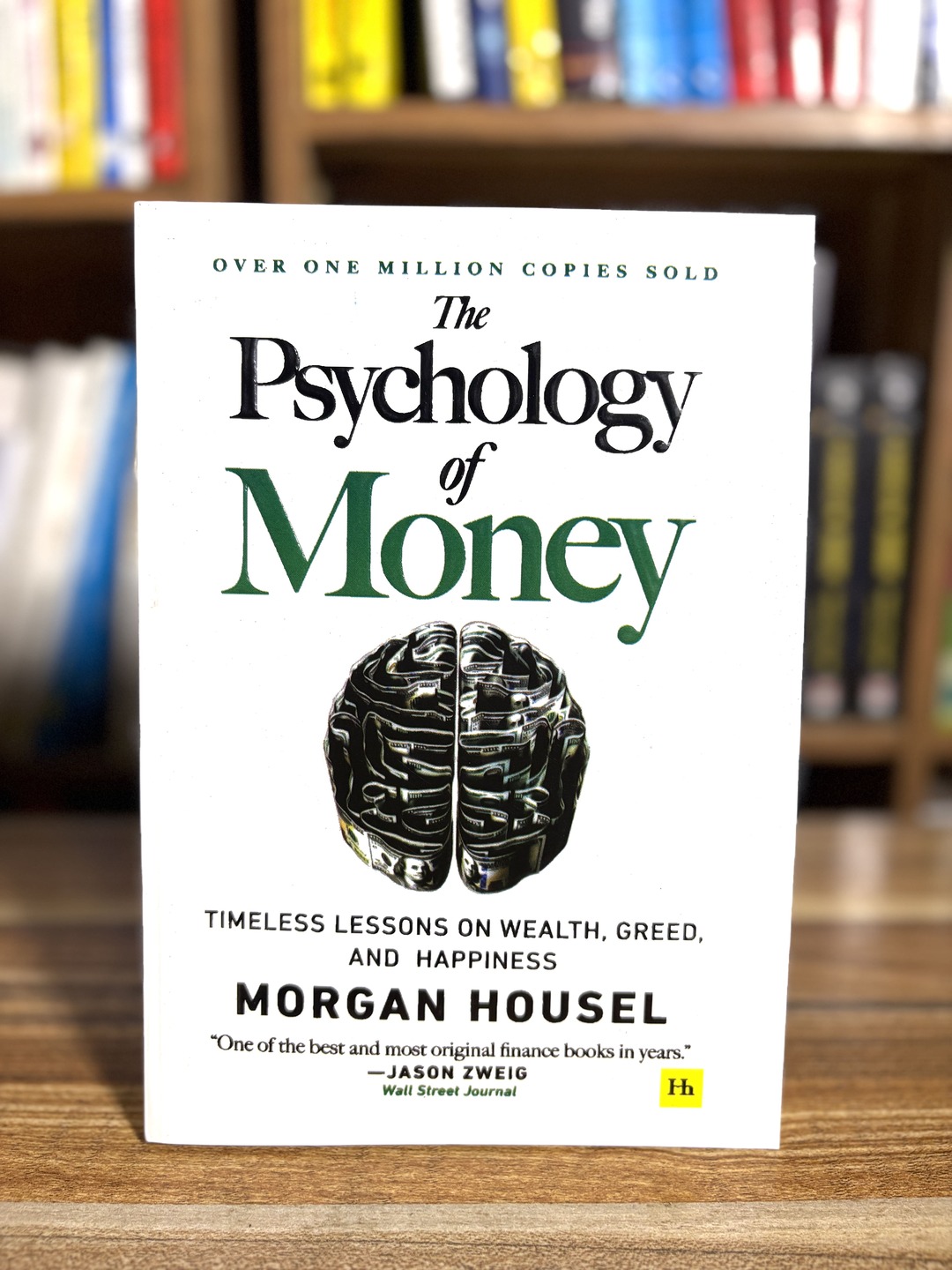
Description
The Psychology of Money presents a simple but transformative idea which is success with money has far less to do with intelligence or complex financial strategies and far more to do with human behavior. Through clear storytelling and relatable examples, the book shows that the way people think, feel, and act around money often matters more than how much they know.
Rather than portraying money as a purely logical subject, the book explores how deeply psychological it is. People make financial decisions based on fear, optimism, pride, insecurity, and past experiences, often without realizing it. Two people with the same information can make completely different choices and end up with very different results, simply because their perspectives and emotional responses differ. This explains why financial success is uneven and why common advice does not work equally for everyone.
Morgan Housel, the author emphasizes that patience, humility, and long-term thinking are far more powerful than trying to predict markets or chase quick wins. Wealth, in this view, is built by avoiding catastrophic mistakes, staying consistent, and allowing time and compounding to do the heavy lifting. Financial freedom does not require perfection; it requires reasonable decisions repeated over long periods. Many people confuse being rich with being wealthy, but the book clarifies that true wealth is often invisible. It is found in savings, flexibility, and the ability to endure uncertainty without panic.



Reviews
There are no reviews yet.